Walk down any high street in a mid-sized city and you will pass at least three salons within ten minutes. Open Google Maps, zoom in on your neighborhood, and the pins multiply. Every one of those salons offers a haircut. Most offer color. Many have a decent Instagram feed and a 4.5-star rating. So why would a new client pick yours?
The uncomfortable answer for most salon owners is: they would not. Not because your work is bad. Not because your prices are wrong. But because from the outside, you look exactly like everyone else. Same menu. Same booking button. Same before-and-after carousel. When every option appears identical, clients default to proximity, price, or whichever name they remember from a friend’s mention six months ago. That is not a strategy — it is a lottery.
Differentiation is the single most under-invested lever in the salon industry. Marketing budgets go toward ads. Energy goes toward social media. But the fundamental question — why should someone drive past three other salons to sit in my chair? — goes unanswered. This article is a practical blueprint for answering it, systematically, across every layer of your business.
Part One: The Online Storefront — Your First and Loudest Impression
Before a client smells your shampoo or touches your front door, they have already judged you. The average consumer visits 3–5 online touchpoints before booking a service appointment: Google search, your website, Instagram, reviews, and Google Maps. If any of these surfaces communicates “generic salon,” you lose.
1. Build a Website That Answers Every Question Before It Is Asked
Your website is not a digital business card. It is a decision-making machine. A potential client lands on your homepage with a single implicit question: “Is this the right salon for me?” Your job is to make that answer an enthusiastic yes within five seconds. List every service with plain-language descriptions — never assume someone knows the difference between a partial balayage and a full highlight. Include approximate duration and price range. Show your team: real photos, short bios, specialties, and a human detail that makes each stylist memorable. Display your location prominently with a map, parking instructions, and public transport notes. State your hours unambiguously. And most importantly: explain what makes your salon different — not in vague marketing language, but in concrete terms a client can verify on their first visit.
2. Own Your Google Business Profile Like a Paid Asset
A neglected Google Business Profile is the biggest free leak in salon marketing. This panel — the one that appears on the right side of search results with your rating, photos, hours, and a big blue “Book” or “Call” button — is often the very first interaction a client has with your brand. Complete every field. Upload fresh photos monthly — not just your logo and storefront, but interior shots, team candids, and finished work. Respond to every review, good or bad, within 48 hours. Use the Q&A section proactively by posting and answering your own common questions. And crucially: keep your name, address, and phone number identical across Google, your website, Instagram, and any directory you appear on. Inconsistency signals unreliability to both clients and Google’s ranking algorithm.
3. Curate a Gallery That Sells Specific Outcomes
Generic “look at this nice hair” photos do not differentiate you. Every image in your gallery should sell a specific outcome to a specific client archetype. If you are exceptional with curly cuts, your gallery should make a curly-haired visitor think, “Finally, someone who actually understands my hair.” If you specialize in lived-in color, your feed should be a masterclass in seamless grow-out. Organize galleries by service type, hair texture, or problem solved. Use consistent lighting and backgrounds. Add brief captions that explain what was done and who it suits. This transforms your gallery from a vanity wall into a conversion engine.
Part Two: The Physical Experience — Designing an Environment That Clients Talk About
Word of mouth is still the most powerful acquisition channel in beauty. But people do not talk about “nice.” They talk about surprising, distinctive, and emotionally resonant. Your physical space needs to earn that conversation.
4. Commit to a Coherent Design Language
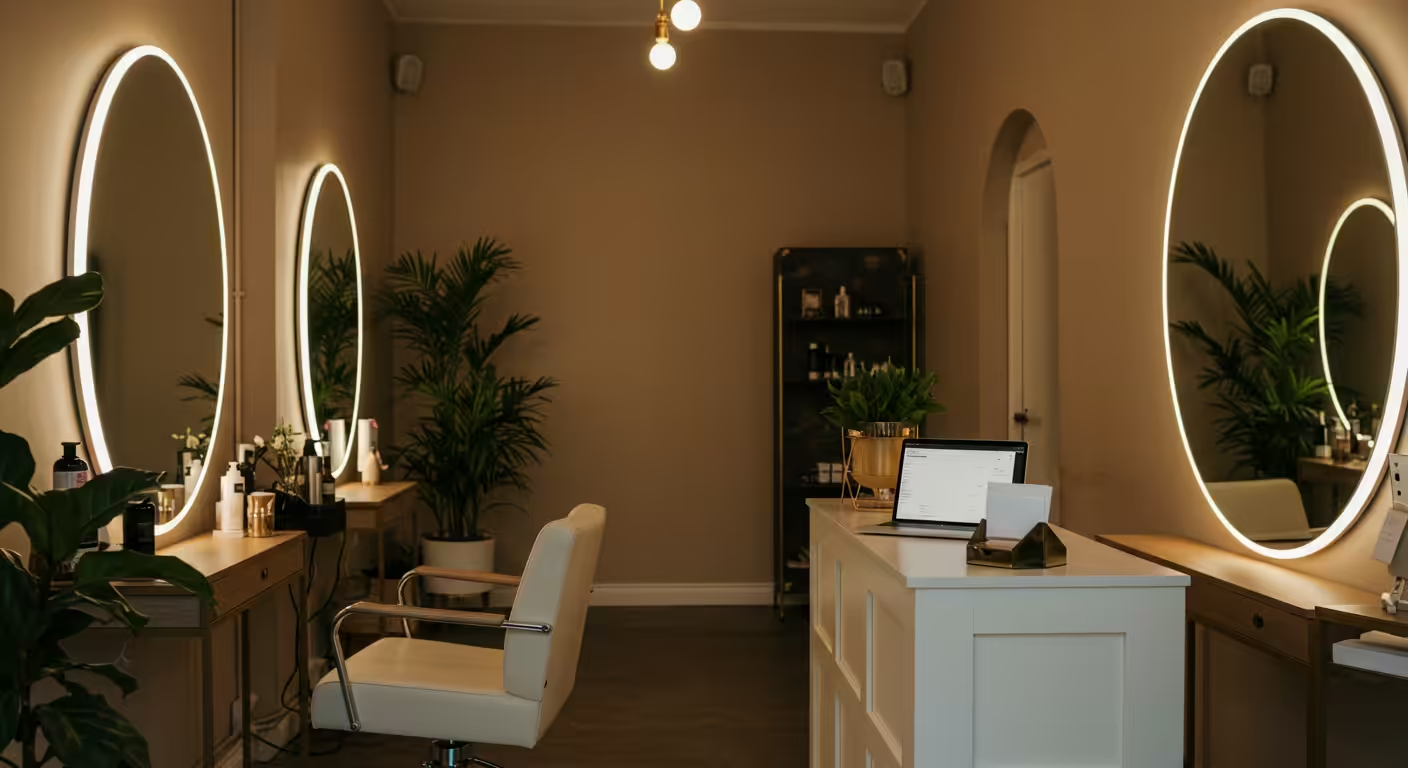
Walk through your salon as if you were a first-time client. What is the visual story? A coherent design language — color palette, lighting, furniture, textures, signage — signals professionalism before a single scissor lifts. This does not require an expensive interior designer. It requires intentionality. Pick two primary colors and one accent color. Choose lighting that flatters skin tone, not fluorescent tubes that make everyone look tired. Use mirrors strategically to open up the space. Keep pathways clear so the salon breathes. Small, deliberate choices compound into a space that feels curated rather than assembled.
5. Embrace Imperfect, Human Warmth
Sterile perfection reads as cold and corporate — the opposite of what most salon clients want. A small amount of lived-in character makes a space feel trustworthy. Real plants, not plastic ones. Books and magazines that reflect your clientele’s interests. A coffee station with a proper machine, not a sad instant jar. The Wi-Fi password displayed visibly without anyone having to ask. These micro-signals communicate: “We thought about you before you arrived.”
6. Create a Ritual, Not Just a Service
The difference between a haircut and an experience is the ritual that surrounds it. Every salon has a shampoo bowl. Very few have a five-minute scalp massage protocol that clients mention in reviews by name. Consider what happens from the moment a client walks in: how they are greeted, what they are offered, how the consultation is structured, what they see and smell and hear during the service, and how they are sent off. Map this journey. Identify the moments of friction and the moments of delight. Then systematize the delight so it happens for every client, every time, regardless of which stylist they see.
Part Three: The Service Menu — Pricing, Positioning, and Portfolio Design
7. Price by Value, Not by the Salon Down the Street
The most common pricing strategy in the salon industry is also the worst: look at what competitors charge, then charge slightly less or the same. This positions you as one interchangeable option among many. Pricing is a communication tool. A higher price, justified by visible quality and experience, attracts clients who value expertise and are less price-sensitive. A mid-range price with clear tiering allows clients to self-select their comfort level. The key is transparency: publish your prices, explain what each tier includes, and never make a client feel ambushed at checkout.
8. Build a Signature Service That Only You Offer
Every salon needs at least one service that cannot be comparison-shopped. Something proprietary — a treatment, a technique combination, a consultation methodology — that exists only within your four walls. Name it. Brand it. Train every team member on it. When a client asks, “Do you do balayage?” the answer is yes, like everyone else. When they ask, “Do you do the [Your Signature Treatment]?” the answer is yes, and only here. That is differentiation you can build a business around.
9. Design Packages That Reward Commitment
Individual service bookings are transactional. Packages and memberships create relationships. A color client who pre-books three appointments at a package rate is more loyal, more predictable, and more profitable than one who rebooks ad-hoc every eight weeks. Design packages around natural service rhythms: seasonal color refreshes, monthly blowout subscriptions, quarterly deep-conditioning treatments. The package should offer genuine value — a 10–15% effective discount — while securing recurring revenue and reducing no-show uncertainty for your business.
Part Four: The Team — Your Most Underused Differentiator
10. Make Every Stylist a Known Quantity
Booking a stylist sight-unseen is one of the biggest anxiety points for new salon clients. Eliminate it. Give every team member a dedicated page or section on your website with a professional photo, a personal bio, their specialties, their favorite products, their training background, and a sentence about what kind of client they work best with. When a new client books with “Sarah — curly hair specialist, 8 years experience, loves working with first-time color clients,” they arrive already trusting her. That trust is earned before the consultation even begins.
11. Invest in Continuous Education — and Publicize It
Clients assume their stylist is keeping up with trends, but they have no evidence. Give them evidence. When a team member completes a certification, attends a workshop, or masters a new technique, announce it. Post about it. Add it to their bio. Frame it in the salon. Education is both a quality signal and a recruitment tool — talented stylists want to work where they will grow. A salon known for developing talent attracts better applicants and retains them longer.
12. Build a Culture That Clients Can Feel
A toxic work environment leaks into the client experience in a thousand tiny ways: tension in the air, forced small talk, stylists watching the clock, high turnover. Conversely, a genuinely positive culture is palpable. Clients notice when team members enjoy working together, help each other out, and seem relaxed. They comment on it in reviews. They come back partly for the vibe. Invest in team communication, clear expectations, fair compensation, and conflict resolution. Culture is not a soft metric — it is a retention and acquisition driver disguised as HR.
Part Five: Social Proof — Making Your Reputation Work Harder
13. Systematize Review Collection
A 4.9 rating with 200 reviews is infinitely more powerful than a 5.0 with 12. Volume and recency matter almost as much as score. Build review requests into your post-appointment workflow: a friendly SMS or email sent the same day, with a direct link to your Google review page. Make it effortless — one tap should open the review box. If clients need to search for where to leave a review, they will not. For stylists who are building their book, incentivize review collection with small bonuses or recognition. Never buy reviews or offer discounts in exchange for five stars — it violates platform policies and erodes trust. But making the ask systematic and frictionless is just good business.
14. Turn Your Best Clients Into a Referral Engine
Your happiest clients are already telling friends about you — they are just doing it slowly and unpredictably. A structured referral program removes friction and adds incentive. Offer a meaningful reward for both parties: “Bring a friend and you both get 20% off your next service.” Make it trackable through your booking platform so you can attribute referrals and reward them automatically, without manual coupon codes or awkward conversations at checkout. A well-designed referral program turns every satisfied client into a soft salesperson.
15. Showcase Your Awards and Press — Strategically
If you have won a local “Best Salon” award, been featured in a publication, or even had a client’s transformation go viral, do not bury it in an Instagram highlight. Put it on your homepage. Frame it in the reception area. Mention it in your Google Business description. Social proof compounds: each piece of external validation makes the next one more likely. A salon that visibly collects recognition is perceived as a salon worth recognizing.
Part Six: Technology — The Silent Differentiator
16. Make Booking Effortless Everywhere Your Clients Are
In 2026, a salon that requires a phone call to book an appointment is leaving money on the table. Modern booking platforms like Altegio embed scheduling directly into your website, Instagram profile, Google Maps listing, and Facebook page. A prospect sees your work, decides they want an appointment, and completes the booking in under sixty seconds — no phone tag, no missed calls, no “I’ll call back later” that never happens. The salon that makes booking frictionless wins the impulse-booking client every time.
17. Automate the Unseen Moments That Build Loyalty
The most memorable client experiences often happen between appointments. Automated appointment reminders reduce no-shows without you lifting a finger. A personalized birthday message with a small discount makes a client feel valued. A rebooking nudge sent two weeks after a color service catches the client right when their roots start showing. A follow-up check 48 hours after a new client’s first visit asks if they are happy and opens the door for a review. These touchpoints, automated through a platform like Altegio, create the impression of a salon that pays attention — because it does, just not manually.
18. Use Your Data, Do Not Just Collect It
Most salon software collects vast amounts of data: appointment history, service preferences, product purchases, no-show rates, rebooking intervals, revenue per client. Most salon owners never look at it. The salons that stand out use this data to make smarter decisions: which services to promote in slow months, which clients are at risk of churning, which stylists have capacity for new clients, which retail products actually sell. A salon management platform like Altegio turns raw booking data into actionable dashboards — showing you not just what happened last month, but what you should do next week. Data-driven salons do not guess. They execute.
Bringing It All Together: The Differentiation Audit
Pick up your phone right now. Google your salon name. Click through your website, your Google profile, your Instagram, and your booking flow. Imagine you are a stranger who has never heard of you. Ask yourself honestly: if there were four other salons within walking distance, all with similar ratings and prices, would you book with you? If the answer is anything short of an immediate yes, you have work to do — and the eighteen strategies above are your roadmap.
Start with one layer. Maybe it is rewriting your website copy this week. Maybe it is photographing your team properly next week. Maybe it is building your signature service next month. Differentiation is not a one-time project. It is a permanent operating principle — the discipline of continuously asking, “Why us?” and making sure the answer gets clearer every quarter.
The salons that win the next five years will not necessarily be the ones with the best scissors or the biggest ad budgets. They will be the ones that gave clients a reason to choose them — a real, articulable, unmistakable reason — and then delivered on that promise every single visit.