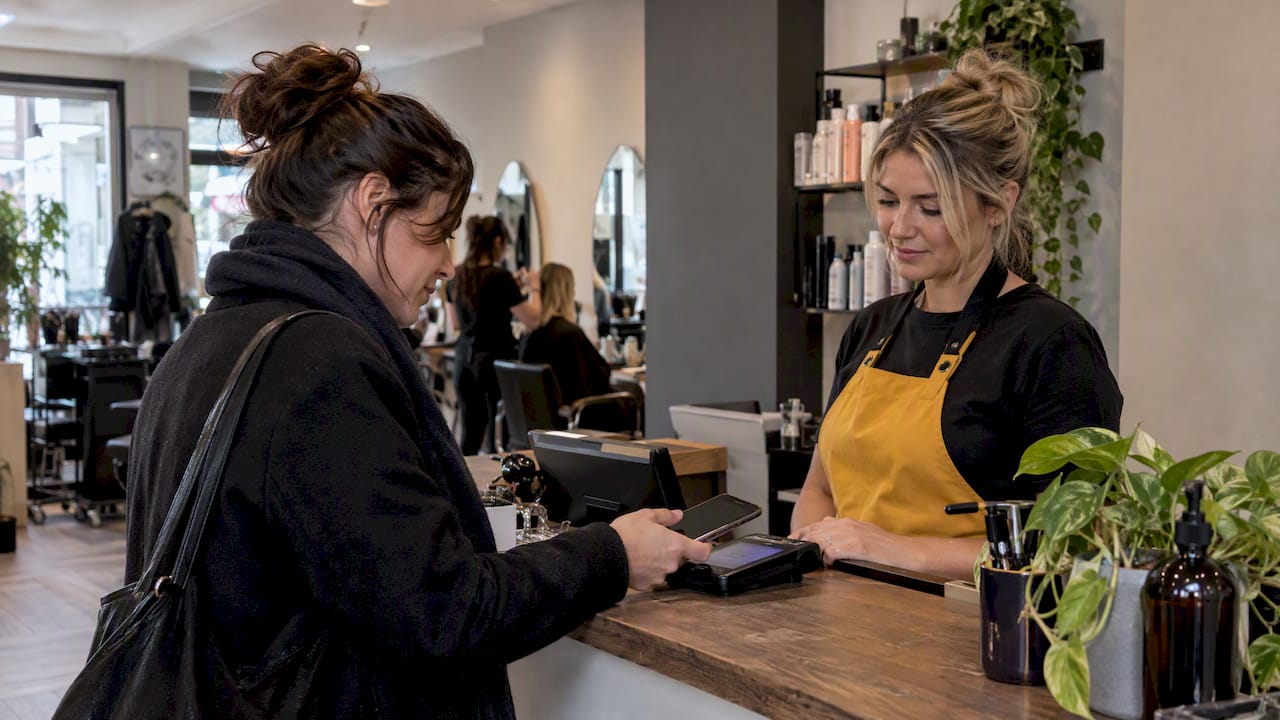
Pay by bank lets a client approve a payment in their own banking app instead of typing in card details. In the EU it rests on two pieces of law: the second Payment Services Directive (PSD2), which regulates payment initiation and strong customer authentication, and the Instant Payments Regulation, which requires banks to offer euro transfers that arrive within seconds at any hour. National schemes such as iDEAL in the Netherlands, BLIK in Poland and Bizum in Spain feel much the same to the client: choose, confirm in the app, done.
This guide covers the rules, the main schemes, how refunds differ from cards, and a deposit checklist for appointment businesses.
How does pay by bank work in the EU?
For the client, it takes three steps: choose to pay by bank at checkout, approve the payment in the banking app, return to your page with a confirmation. No card number is entered, and the business never sees the client’s banking login.
Behind those steps sit a few rules from PSD2 (Directive (EU) 2015/2366), which has applied since January 2018:
- Payment initiation. A payment initiation service starts a payment order, at the client’s request, from an account held at another payment service provider (PSP). The firm offering it must itself be an authorised PSP, and it may not hold the payer’s funds, store sensitive payment data or change the amount or the payee.
- Strong customer authentication (SCA). The client’s bank checks two independent factors – something they know, something they have or something they are. For online payments, the authentication is tied to the specific amount and payee, including when a third party initiates the payment.
- The transfer itself. The money moves as a credit transfer from the client’s account. In euro, that’s a SEPA credit transfer – standard or instant.
Some national schemes work inside the banks’ own apps instead of through a separate initiation provider, but the client experience is much the same.
What did the Instant Payments Regulation change?
Instant euro transfers have existed since the European Payments Council launched its SEPA Instant Credit Transfer scheme in November 2017, but banks didn’t have to offer them. Regulation (EU) 2024/886, adopted on 13 March 2024, changed that. It requires PSPs that offer euro credit transfers to offer instant ones too, around the clock on every calendar day, with the money on the payee’s account within 10 seconds. In the euro area:
- Receiving instant euro transfers has been mandatory since 9 January 2025, and sending them since 9 October 2025.
- Price: since 9 January 2025, an instant transfer may not cost more than a standard credit transfer of the same type.
- Verification of payee: since 9 October 2025, the payer’s bank checks the payee’s name against the IBAN before the payer approves a transfer, free of charge. If the name doesn’t match, the payer is warned that the money might reach the wrong account. If it almost matches, the bank shows the name actually linked to the account.
PSPs in EU countries outside the euro area have until 9 January 2027 to receive instant euro transfers and until 9 July 2027 to send them and offer verification of payee. Electronic money and payment institutions have their own deadlines in 2027. The regulation deals with transfers in euro; payments in other currencies, such as Polish złoty, run on national systems and schemes.
Two practical points follow. Put the exact account holder name on invoices and confirmations, not just your trading name, so clients paying by manual transfer get a match. And “instant” describes the bank-to-bank leg: if a payment provider collects for you, the money reaches your account on its payout schedule.
Which pay-by-bank schemes do clients already use?
Which schemes matter depends on where your clients bank. A few examples:
- iDEAL (Netherlands): an online payment method that lets consumers pay through their own bank’s internet or mobile banking. The European Payments Initiative (EPI) plans to move iDEAL users to Wero by 2027.
- BLIK (Poland): the client takes a one-off six-digit code from their bank’s app to pay online or in a shop, and can also send money to a phone number.
- Bizum (Spain): backed by Spanish banks. To pay online, the client chooses Bizum, enters their phone number and confirms the payment in their bank’s app.
- Wero (EPI): a wallet built on instant account-to-account payments. It launched for payments between people in Belgium, France and Germany in 2024; online shop payments went live in Germany first and are expanding to other countries.
Cards, including national schemes such as Cartes Bancaires in France and Girocard in Germany, aren’t going away. Pay by bank works best as an extra option.
How do fraud and refunds differ from card payments?
A card payment can be reversed through a chargeback, which is a card-scheme rule. A credit transfer has no equivalent. Under PSD2, a payment order can’t be revoked once the payer’s bank has received it, and when a payment initiation provider starts the payment, the payer can’t revoke it after giving consent.
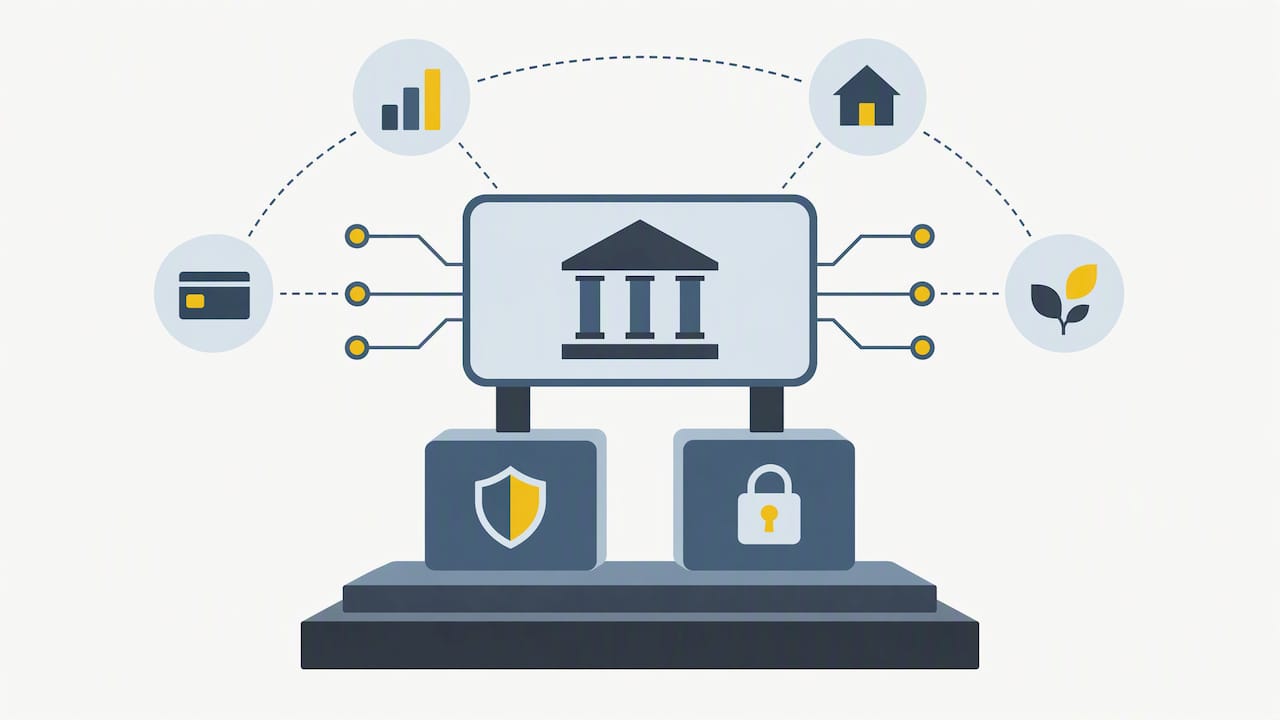
The client is still protected in some situations:
- Unauthorised payments. If a payment was made without the client’s consent, their bank must refund it immediately and no later than the end of the following business day, including when a third party initiated it. The client must report it without undue delay and within 13 months of the debit. There are exceptions, for example where the payer acted fraudulently.
- Wrong account details. A transfer sent to the IBAN the payer entered counts as correctly executed. The bank must make reasonable efforts to recover the money, and verification of payee now warns the payer before they approve.
- Scams where the client approved the payment. PSD2 gives no general refund right here. On 27 November 2025, EU negotiators reached a provisional agreement on a new Payment Services Regulation and a third Payment Services Directive (PSD3), including refunds in some impersonation scams. At the time of writing (October 2026), the texts are still going through formal adoption, so PSD2 applies.
For a business, your refund policy does the job a chargeback does for cards, so write it down, show it before the client pays and stick to it. Protect your payment channels too: ask clients to pay only through your booking page or a payment link you send, never to account details that arrive in an unexpected message.
A checklist for taking deposits by bank
Treat the rollout as a small project with one owner, and work through it in order:
- Decide what you take upfront. A deposit or full prepayment, and for which services. Example: for a 90-minute treatment priced at €120, a 25% deposit is €30 when the client books, and the remaining €90 is paid at checkout.
- Write the terms and show them before payment. The deposit, the fee for a no-show or late cancellation, and the free cancellation window. If a client cancels late and your policy keeps the deposit, you keep the €30; if they cancel in time, they get it back or keep it as credit for their next appointment.
- Offer the methods your clients know. Add the bank-based methods available in your country and keep cards and wallets as a fallback.
- Set a payment deadline. Decide how long an unpaid appointment holds its slot before it’s released.
- Agree the status language. Paid, pending, failed and expired should mean the same to everyone at the front desk, each with a next step. If a client says “I paid”, check the status in your system, not their screenshot.
- Write the refund process. Who can issue a refund, how fast, and what the client is told.
- Check your provider. EU authorisation, methods and currencies in your country, payout frequency, refund fees, and whether payments land against the right appointment.
- Reconcile at two levels. Match each payment to its appointment, then each provider payout to the payments it contains.
- Pilot first. Start with one service or one location for a month. Expand when every payment reconciles without manual edits and refunds work end to end.
Tell clients in one line what will happen – “You’ll confirm the payment in your banking app.” For more on prepayment rules, see our guide to accepting payments during the booking flow.
How Altegio handles bank-based payments
In Altegio, online payments run through a connected payment system, and the systems available depend on your country. For eligible businesses in EU countries, the Adyen integration adds local methods such as BLIK and online banking in Poland and Bizum in Spain, alongside Cartes Bancaires, Girocard, cards, Apple Pay and Google Pay. Clients can pay in the online booking widget when they make an appointment, or through payment links and QR codes you send by SMS, email or messenger. Availability also depends on your business category, and Adyen isn’t available to individual entrepreneurs. iDEAL and Wero aren’t among the methods listed on the Altegio Adyen page, so check with Adyen before you promise them to clients.
Deposits are set up through payment policies:
- Deposit mode works with any payment system available in your region. The online booking widget shows the client the deposit, the no-show fee and the free cancellation window, and the client agrees before paying.
- Payment deadline: the appointment is held while the client pays – 15 minutes by default – and cancelled automatically if they don’t.
- Front desk view: the appointment shows a Payment Policy block with the deposit amount, the no-show fee, the free cancellation window and its status.
- Checkout: the deposit is applied first to the appointment total, and the client pays the rest by any method – in the example above, the remaining €90.
- No-show or late cancellation: the deposit goes to the business by default, or an administrator can keep it on the client’s balance if you’ve allowed that. A cancellation inside the free window releases the deposit to the client’s balance.
Card guarantee mode, where the client links a card that is charged only after a no-show or late cancellation, works only with Adyen in EU countries. It needs a card, so for clients who pay by bank, use deposit mode.
For reconciliation, the Adyen Dashboard in Altegio shows every payment, searchable by PSP reference, and the weekly payouts to your bank account. The location owner issues refunds from the same screen; a refund fee applies, and processing fees already charged aren’t returned. Deposit movements also appear in Finance > Financial transactions.
One limit to know: automatic membership renewal in Altegio is available only in Brazil, so recurring automatic payments for memberships aren’t an option for European businesses today. With Adyen, clients can still buy memberships, service packages and gift cards online with a one-off payment. For a walk-through of both payment policy modes, read payment policies, card guarantee and Adyen.
FAQ
Is pay by bank the same as open banking?
Open banking is the wider idea: regulated third parties access payment accounts with the client’s consent, either to read account information or to initiate payments. Pay by bank is the payment side of it, although some national schemes run inside banks’ own apps rather than through a third party.
Can clients pay a deposit by bank in Altegio?
In EU countries where Adyen is available, clients can use the local methods it offers, such as BLIK, online banking in Poland and Bizum, as well as cards and wallets. Which methods appear depends on your country and your Adyen account.
General information, not legal or financial advice. Payment rules and schemes differ between EU countries, so check the details with your payment provider and the rules where your business operates.
Read next
- Protect your most expensive slots: payment policies, card guarantee and Adyen
- Accept payments during the booking flow – deposits and full prepayment
- Reminders and deposits: how to reduce no-shows