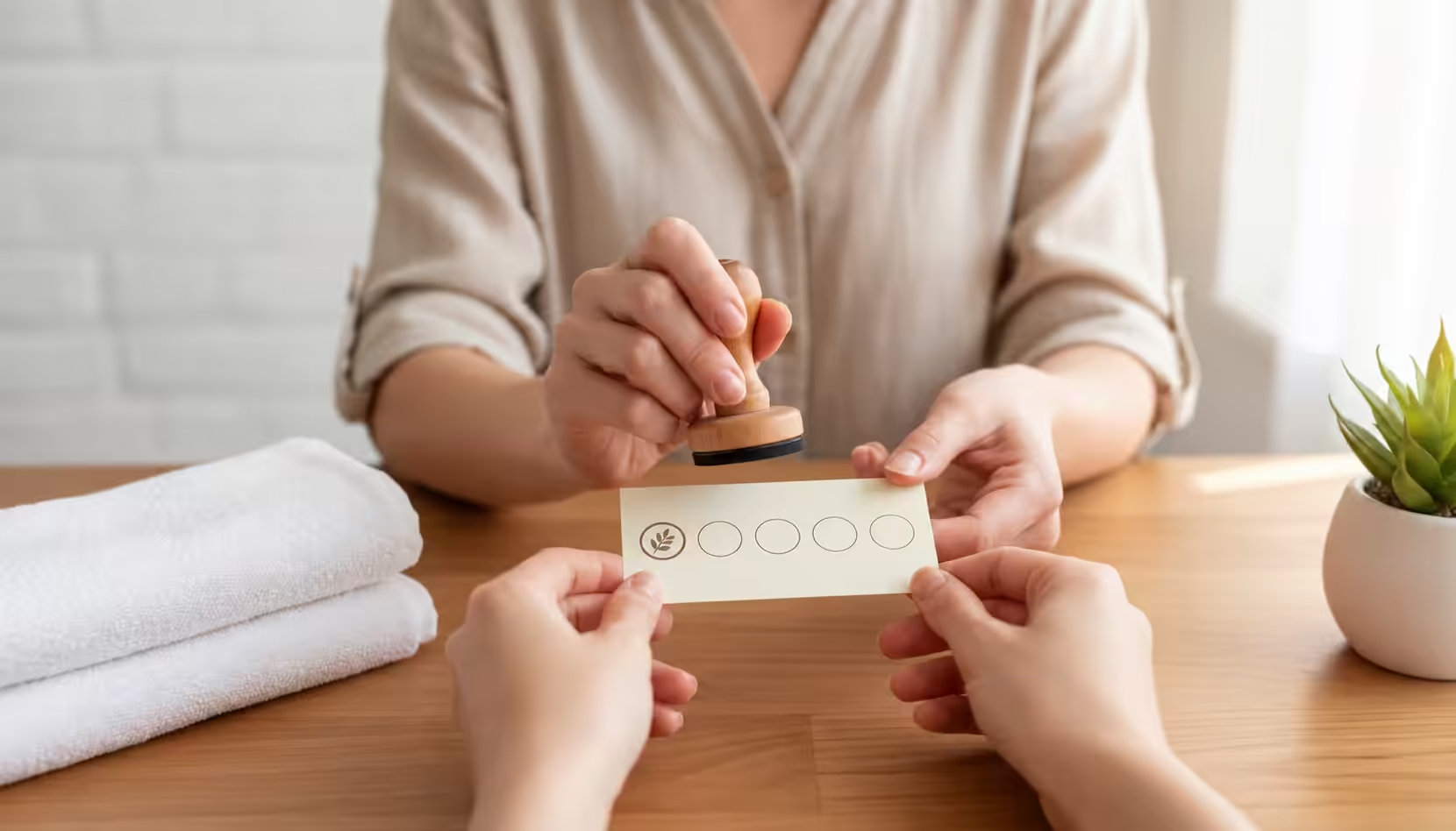
The loyalty card is the oldest trick for bringing clients back – and it still works, as long as it isn’t handed out blindly. The 2027 question is no longer whether to have a card, but where: a paper stamp card, a dedicated app, or a card right inside the booking system. Below we compare all three paths in money – what they cost to set up, what happens when the card gets lost, whose data it is – and we calculate what the “tenth visit free” reward really costs the salon
In short
- The “every tenth visit free” reward doesn’t cost €50: at a 60% margin it comes to roughly €20 in materials and time – spread over the cycle that is about €2 per visit, i.e. 4% of revenue
- A loyalty card pays for itself with one retained client: a regular with an average €50 service leaves around €300 a year in the salon – rewards for nine loyal clients cost less
- The paper card is cheap to make and expensive to lose: printing costs pennies a piece, but the card dies in the wallet – no data, no reminders, no second chance
- A dedicated loyalty app costs tens of euros a month: and the client data lives with the platform operator, not with you
- A card with a name and visit history is personal-data processing: you must state the purpose upfront, and personalised marketing needs provable consent – anonymous stamps, by contrast, raise no GDPR duties
What a loyalty card is and how it differs from a loyalty program
A loyalty card is a tool: a piece of paper, a record in an app or in the booking system that counts a specific client’s visits or spending and triggers a reward at a set point. A loyalty program is the rules of the game: what counts, what the reward is and when it is earned. A card without a thought-through rule is just a feel-good stamp – and a rule without a card cannot be enforced.
This text deals with the card, i.e. the medium. How to set the rules themselves – and what a loyalty program quietly does for your revenue – we covered in our text on the hidden benefits of a loyalty program; here we touch the rules only where they decide the choice of medium. The trend behind it is clear though: as we wrote in our overview of beauty industry trends for 2027, personalisation on data is one of the seven things that will decide who captures the market’s growth.
Why a loyalty card pays off for a salon: the numbers
Numbers first, emotions second. A model salon: average service €50, a regular client comes six times a year – she leaves €300 in revenue, at a 60% margin roughly €180 in margin. Every client who leaves for a competitor means that amount again every year.
Now the reward. The classic “every tenth visit free” sounds expensive – you are giving away a €50 service. Except you really give it away only after nine paid visits, i.e. after €450 of revenue. And the true cost of the reward is not the price-list price: at a 60% margin the free service costs you roughly €20 in materials and the artist’s time. Spread over the whole cycle it is about €2 per visit – around 4% of revenue.
A simple threshold follows: for the card to pay off, the rewards only need to retain one client who would otherwise leave. One retained client (€180 margin a year) pays for the rewards of roughly nine loyal ones. The loyalty card is one of the few things in a salon where the maths errs in your favour.
The paper stamp card: what it costs and where it fails
The paper card is the fastest start: a design in an evening, printing at pennies a piece, the stamp is already in your drawer. For a salon that has nothing today, paper still beats nothing.
It fails in three places. First: the card dies in the wallet – the client leaves it at home, loses it, forgets it, and the half-finished cycle disappears with it; a new card starts from zero and the enthusiasm doesn’t come twice. Second: you know nothing – paper won’t tell you how many cards are alive, how many are one step from the reward, and which client is drifting towards leaving. Third: paper can’t send reminders – a card in a wallet won’t invite the client back, a return message will.
And one extra trap: stamps without rules can be “stamped up”. If you keep paper cards, at least write down who may stamp and at what spend – otherwise the program quietly hands out discounts nobody approved.
The digital loyalty card: apps and QR
The second path is dedicated loyalty apps: the client has the card in her phone or Wallet, a stamp is added after scanning a QR code, the platform does push reminders and statistics. Against paper it is a leap: nothing gets lost, you see the numbers.
Calculate two things beforehand. The first is price: standalone loyalty platforms cost tens of euros a month per location – another fixed cost next to the booking system, the till and the website. The second is ownership: the data about clients and their visits lives in someone else’s app; when you leave the platform, the loyalty history leaves with it. It is a milder version of the old marketplace question – whose client is she, really.
The card inside the booking system: loyalty where the records already are
The third path builds nothing new: the loyalty card lives where the salon already has bookings, the client card and visit history. Every visit writes itself into the loyalty record, the discount applies right at payment in the appointment, and the reminders – which already run in the system because of no-shows – work for loyalty too.
In Altegio this layer is part of the subscription: loyalty card types with their own discount rules, applying the card right when paying for the appointment, plus gift cards and memberships on the same client card. No extra monthly fee, no second app for the client – and the data stays with you, in the system you pay for. The maths of why a booking system pays off even without loyalty is in our text on why a salon needs a booking system.
Three shapes of the card in one table
| Paper card | Dedicated app | Card in the booking system | |
|---|---|---|---|
| Setup | pennies a piece | free to tens of euros setup | in the system subscription |
| Monthly cost | €0 | tens of euros | €0 extra |
| When the card is lost | the cycle ends | nothing, all in the phone | nothing, all in the client card |
| Client data | none | with the platform operator | with you in the system |
| Reminders | can’t | push from the app | same messages as bookings |
| GDPR | anonymous stamps, no duties | processor agreement with the platform | within existing records |
How to set rewards so the card earns
A reward reachable within a year. A hairdressing client with six visits a year won’t collect ten stamps in under twenty months – that’s not loyalty, that’s archaeology. For long-cycle services put the reward on the sixth visit; for short cycles (nails every two-three weeks) the tenth is fine.
A midpoint milestone. A small bonus after the third visit – a sample, a small add-on service – keeps the card alive exactly where most of them die.
Bonus stamps for behaviour you want. An extra stamp for booking the next visit right in the salon, two for referring a new client. You reward precisely what fills the calendar.
And price the reward in advance. The formula from chapter two: the true cost of the reward = price-list price × (1 − margin). A €50 service at a 60% margin = €20; spread over the stamp cycle you see what percentage of revenue the program gives away. Stay under 5% – above that the card no longer competes with your competitors but with your margin.
The loyalty card and GDPR: what you may record
As soon as the card carries a name, a phone number or visit history, you are processing personal data. The frame is the same as for the client card: state the purpose upfront (running the loyalty program), record only what you need for it, and for tailored marketing messages – offers based on visit history – have provable consent. The client has the right to erasure; a lost slip of paper with stamps interests nobody, deleting a profile in an app does.
Two practical notes. An anonymous paper card with no name collects no personal data – the GDPR duties disappear together with the data, which is exactly the trade: no records, no obligations, no return messages. And with a dedicated loyalty app you are the data controller and the platform the processor – ask to see the processor agreement before signing, not after. The details differ by country, so check the specifics with your national data protection authority.
FAQ
What is a loyalty card?
A tool that counts a specific client’s visits or spending and triggers a reward at a set point – a paper stamp card, a card in an app, or a record in the booking system. The card is the medium; the rules of the game (what counts and what the reward is) are set by the loyalty program.
Paper or digital loyalty card?
Paper is the fastest start at pennies a piece, but the card gets lost, yields no data and can’t send reminders. A digital card loses nothing and sends messages – either for tens of euros a month in a dedicated app, or at no extra cost as part of the booking system where the salon already keeps its clients.
How many stamps should the card have?
As many as let a regular client reach the reward within twelve months. For hairdressing services with six visits a year put the reward on the sixth visit; for short cycles like nails the tenth is fine. A midpoint milestone keeps the card alive where most of them die.
What does GDPR say about loyalty cards?
A card with a name and visit history is personal-data processing: you must tell the client the purpose upfront, and personalised marketing messages need provable consent; the client has the right to erasure. An anonymous stamp card with no data keeps no records – which is also why it can’t do anything.
Does a card pay off for a small salon?
For a small one most of all: the “tenth visit free” reward costs roughly €2 per visit at a 60% margin, and one retained client (around €300 revenue a year) pays for the rewards of nine loyal ones. You can start on paper for pennies – or straight in the booking system you already pay for.
Loyalty isn’t counted in stamps but in returns. Loyalty cards with your own rules, gift cards, memberships and the reminders that bring clients back to the calendar – you have them in Altegio within the subscription: 7 days free, no card and no commission on bookings
This article is for information only and is not legal advice. Personal-data rules may change – check the setup of your loyalty program with your national data protection authority and discuss the specific platform contract with a lawyer.